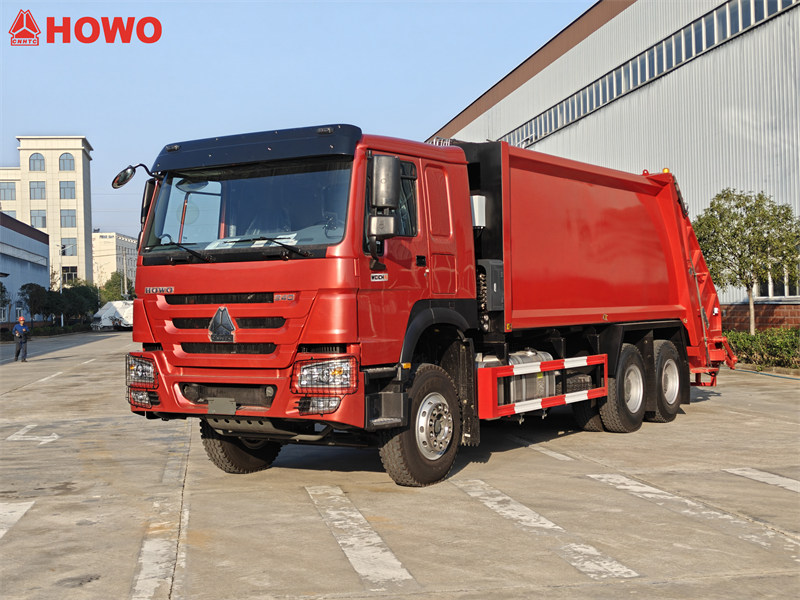
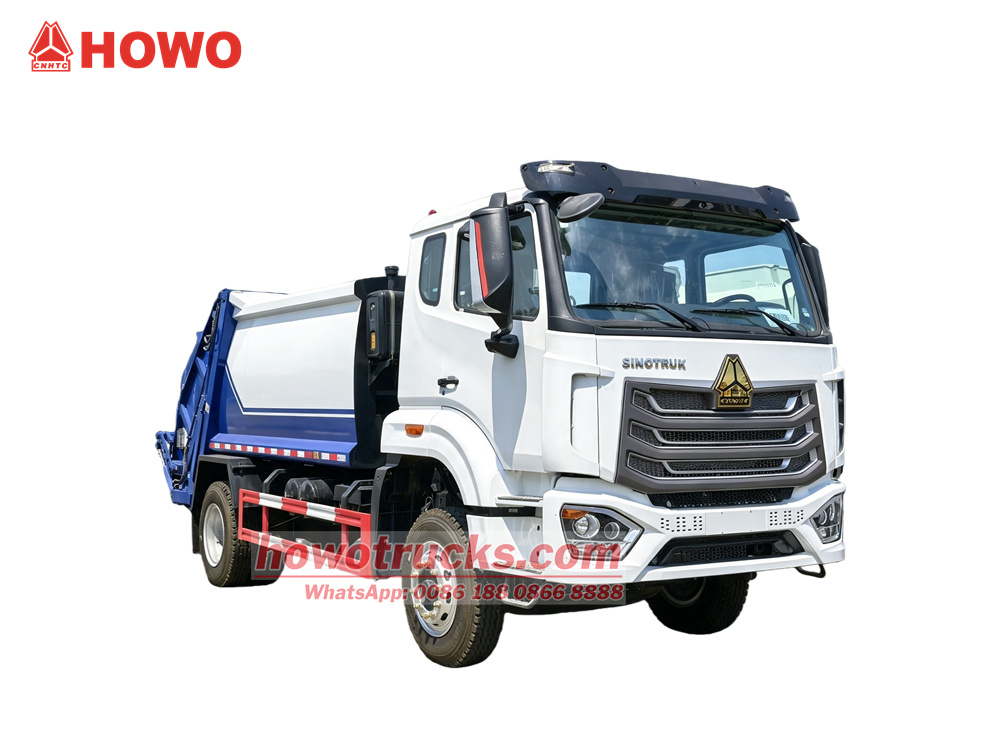
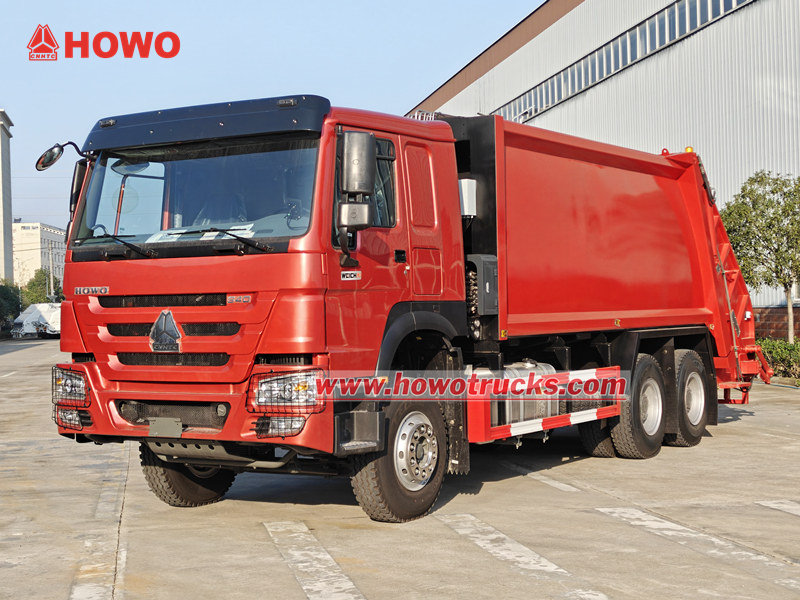
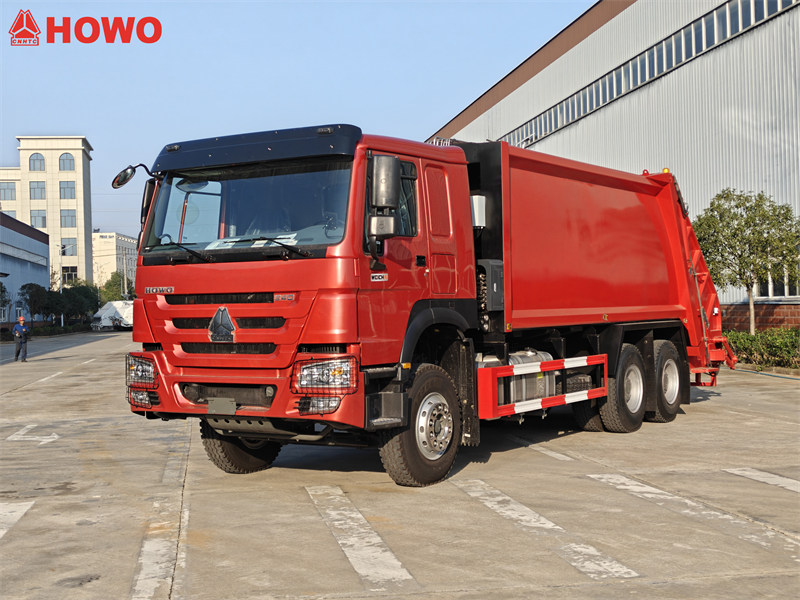
The Howo heavy garbage rear loader truck is a heavy duty sanitation equipment developed for large-scale garbage collection and transportation scenarios such as cities, large parks, and factories. With "large capacity, high reliability, strong environmental protection, and easy operation" as its core positioning, it takes into account practicality and economy. It can efficiently complete the entire process of collection, compaction, and transfer of barrelled, bagged, and bulk household waste, and is one of the indispensable core equipment in the modern sanitation system.
Ⅰ.Operation Mode of Howo Compactor Garbage Truck:
♦ Waste Collection Stage:
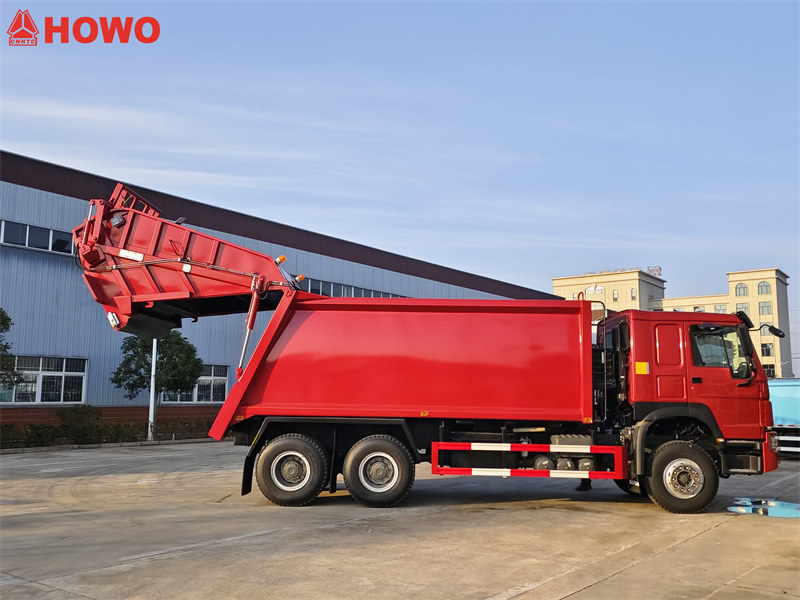
After The Howo garbage rear loader arrives at the waste collection point, it operates the corresponding tipping mechanism according to the type of waste container to pour barrelled, bagged, or bulk waste into the hopper of the tail filler. This stage can be completed via electronic control buttons or the cab control panel. The tipping mechanism operates smoothly, with a single loading time of only 8-10 seconds, resulting in high operational efficiency.
♦ Waste Compaction Stage:
Once the waste in the hopper reaches a certain volume, the compaction system is activated. The sliding plate drives the scraper downwards, inserting it into the waste for crushing and initial compression. The scraper then rotates forward to further compact the waste. After reaching its final position, the scraper moves upwards with the sliding plate, pushing the compacted waste into the compartment.
During continuous compaction, the pusher inside the compartment gradually retreats under the pressure of the compression force, overcoming back pressure, ensuring the waste is evenly distributed throughout the compartment. This bidirectional compression ensures full utilization of the compartment space and prevents loose waste from taking up too much space.
♦ Waste Transfer Stage:
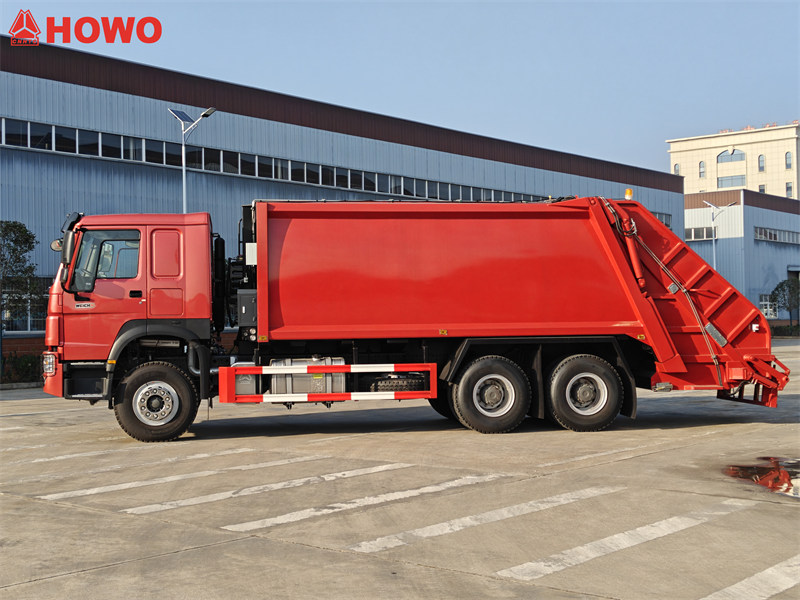
After the waste is compaction, the rear sealing cover of the container is closed to ensure the bin is completely sealed, preventing waste spillage, odor spread, and sewage leakage during transfer. The driver then drives the vehicle to the waste treatment plant, utilizing the chassis's powerful and stable performance to complete the long-distance transfer. During the transfer, the vehicle's location can be monitored in real-time via a satellite positioning driving recorder to ensure standardized transfer procedures.
♦ Waste Unloading Phase:
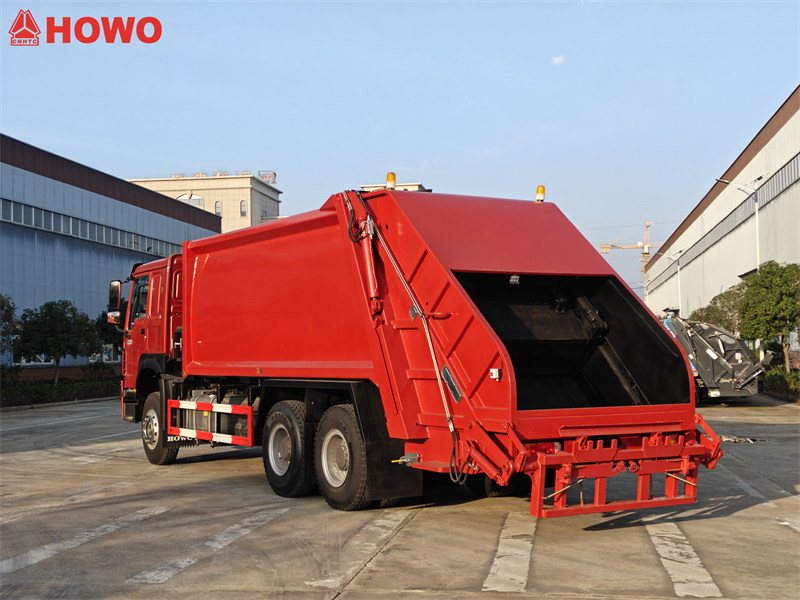
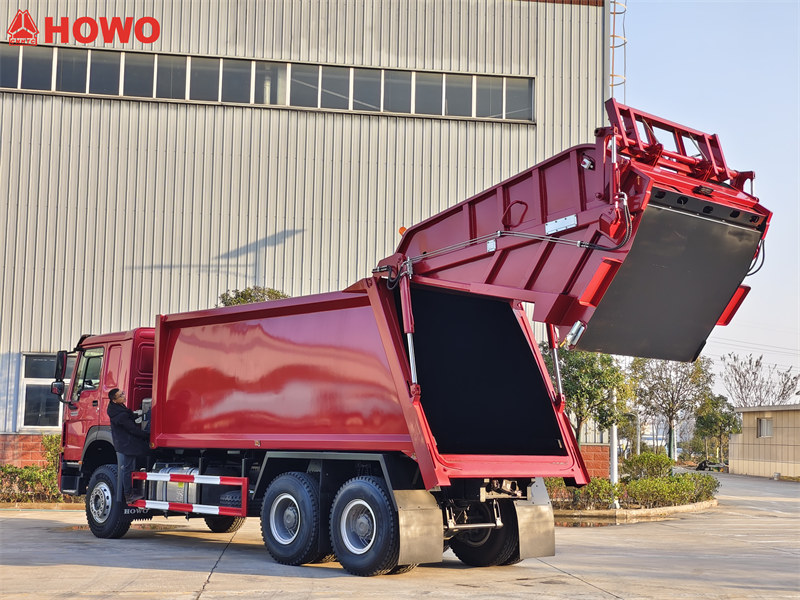
After the Howo trash loader truck arrives at the waste disposal site, the electronic or manual control system is used to first raise the rear filler, opening the rear of the truck body. Then, the pusher mechanism is activated, moving horizontally backward to push out the compressed waste from the truck body, completing the unloading process. Each unloading operation takes ≤45 seconds, ensuring thorough unloading with no waste residue. After unloading, the pusher and filler are reset, the rear of the truck body is closed, and preparation for the next operation begins.
Ⅱ.Application Scenarios of Howo Garbage Rear Loader Truck:
1. For densely populated urban residential areas and communities, where waste is primarily in bins and bags, and the volume is large with scattered collection points, this truck features multiple optional tipping mechanisms to accommodate different bin sizes. Bi-directional compression technology compacts loose household waste, and the large 20CBM bin can meet the collection needs of multiple communities in one go.
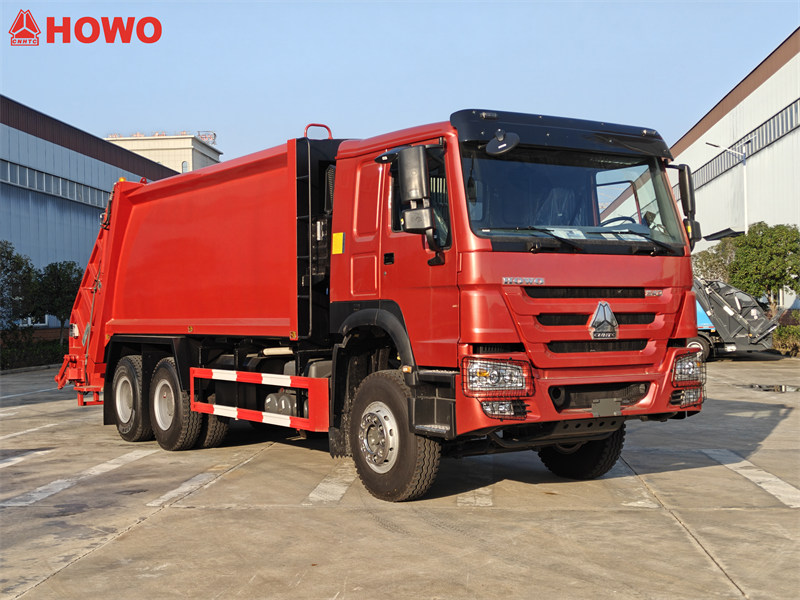
2. For large factories and mines, where waste may contain small amounts of debris and loose waste, the Howo garbage compactor truck features a rationally designed hopper and a scraper with a crushing function. This breaks down large pieces of waste before compression, preventing blockages and operational disruptions. The high-strength body can withstand impacts from debris, extending the equipment's lifespan.
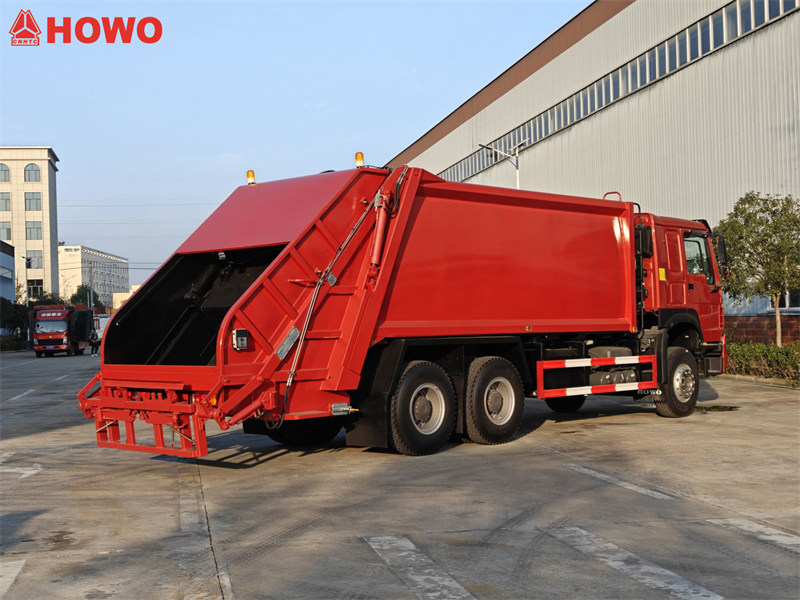
3. For scenarios involving long-distance waste transport, the Howo garbage compactor truck boasts a powerful and fuel-efficient engine, enabling efficient long-distance transport. The fully automatic electronic control system reduces driver steps and fatigue during long-distance operations. Safety features such as ABS and air brakes ensure vehicle braking safety during long-distance travel and in complex road conditions, preventing vehicle malfunctions from affecting the progress of garbage transfer.

 English
 Français
 Deutsch
 Русский
 Italiano
 Español
 Português
 Nederland
 日语
日语 한국어
한국어 Türk
Türk Ελληνικά
 แบบไทย
 Magyar
 Indonesia
 Tiếng Việt
 عربي
عربي Қазақстан
 မြန်မာ
 Filipino
 kiswahili
 Türkmenler
 o'zbek
 Кыргызча
 українська
 čeština
 Slovák
 Română
 فارسی
فارسی hrvatski
 Svenska
 中文
中文



 IPv6 network supported